Technology has made it easier than ever to monitor another person.
A smartphone can secretly record a conversation. A GPS tracker can reveal someone’s every movement. Hidden cameras can capture private moments without the other person’s knowledge.
In many cases, people believe they are entitled to use these devices because they are trying to protect themselves, gather evidence, or prove that someone has done the wrong thing. Others may use surveillance to monitor a partner during a relationship breakdown or parenting dispute.
However, surveillance laws in New South Wales are far more complex than many people realise. Recording a conversation or tracking another person’s movements without lawful authority can amount to a criminal offence. Understanding where the law draws the line is critical.
What is a Surveillance Device?
The governing legislation surrounding surveillance devices is the Surveillance Devices Act 2007 (NSW). Under this legislation, a ‘surveillance device’ includes four general categories of devices:
- Listening devices – any device capable of overhearing, recording or listening to a conversation.
- Optical surveillance devices – any device capable of visually recording or observing an activity.
- Tracking devices – any electronic device capable of determining or monitoring the location of a person or object.
- Data surveillance devices – any device or program capable of recording or monitoring information entered into or retrieved from a computer or electronic system.
The Use of Listening Devices
A common question we’re asked is, “Can I secretly record a conversation if I’m part of it?”
The short answer: it depends.
Generally speaking, it is an offence to knowingly use or install a listening device to record a private conversation without the consent of the other person.
A private conversation is generally one where the parties reasonably expect that the conversation will not be overheard by others. This includes conversations that take place:
- Inside a home;
- Inside a vehicle;
- Over the phone;
- During private meetings; or
- In many work settings.
Just because a conversation takes place in a public place does not necessarily mean it isn’t private.

When Can You Legally Record a Conversation?
A person who is party to a conversation may be able to secretly record the conversation in limited circumstances. Important exceptions are:
- That recording was reasonably necessary to protect the lawful interests of the person making the recording;
- The recording was made with the express or implied consent of all involved parties; or
- The listening device unintentionally recorded a private conversation.
The ‘reasonably necessary’ test
In the case of Sepulveda v R [2006], the complainant secretly recorded conversations with the alleged offender in relation to historical sexual abuse allegations. The complainant intended to use the tape recordings as evidence. The Court found the recordings were not ‘reasonably necessary’ because the complainant could have approached police, who could have obtained a lawful surveillance warrant which would authorise the recording.
In other words, simply believing that a recording may help prove wrongdoing does not automatically make it lawful.
The ‘Lawful interests’ test
The courts have acknowledged that recordings may sometimes be reasonably necessary to protect a person’s lawful interests.
For example, in DW v R [2014] NSWCCA 28, a 14-year-old girl secretly recorded a conversation with her father on her mobile phone after he denied allegations that he had sexually abused her. The recording became important evidence in his trial, ultimately contributing to his conviction.
Although the Surveillance Devices Act 2007 (NSW) generally prohibits the secret recording of private conversations, the Court found that this recording fell within an exception because it was ‘reasonably necessary’ for the ‘protection of her lawful interests’. The Court recognised that protecting herself from sexual abuse and preserving evidence of the alleged offending were legitimate lawful interests in the circumstances.
Furthermore, given her young age and her vulnerability to her parent, she could not reasonably have been expected to understand the legal options available to commence a formal investigation.
Cases such as these demonstrate that recordings made to genuinely protect a person’s safety or legal interests may fall within the statutory exception.
Tracking Movements
Location tracking technology has become increasingly common. Common examples include:
- Apple AirTags;
- GPS;
- Mobile phone location sharing;
- Family tracking apps; and
- “Find My” applications.
These technologies have legitimate uses; however, secretly tracking another person’s movements without their knowledge or consent can expose you to criminal liability.

The legality of tracking someone depends on factors including:
- Who owns the device;
- Whether consent was given;
- Who owns the vehicle or property; and
- Why the device was installed.
These situations can often arise during relationship breakdowns, parenting disputes and domestic violence matters.
Hidden Cameras and Video Recordings
Secret video recording is also heavily regulated.
Hidden cameras placed inside homes, bedrooms, bathrooms or other private areas can constitute the unlawful use of an optical surveillance device.
Whether a recording is lawful depends on several factors, including:
- Whether the activity recorded was private;
- Whether there was consent;
- Where the recording occurred; and
- The purpose for which the recording was made.
Importantly, even if the recording itself is lawful, sharing or publishing that footage may constitute a separate offence.
Accessing Devices
Using software to monitor another person’s:
- Text messages;
- Emails;
- Internet activity;
- Passwords;
- Social media; or
- Bank accounts,
may involve the unlawful use of a data surveillance device or amount to other criminal offences under Commonwealth law. Simply knowing another person’s password does not mean you are entitled to access their private information.
Surveillance and Coercive Control
An individual convicted of unlawfully using a surveillance device may face a maximum penalty of 100 penalty units, imprisonment for up to five years, or both.
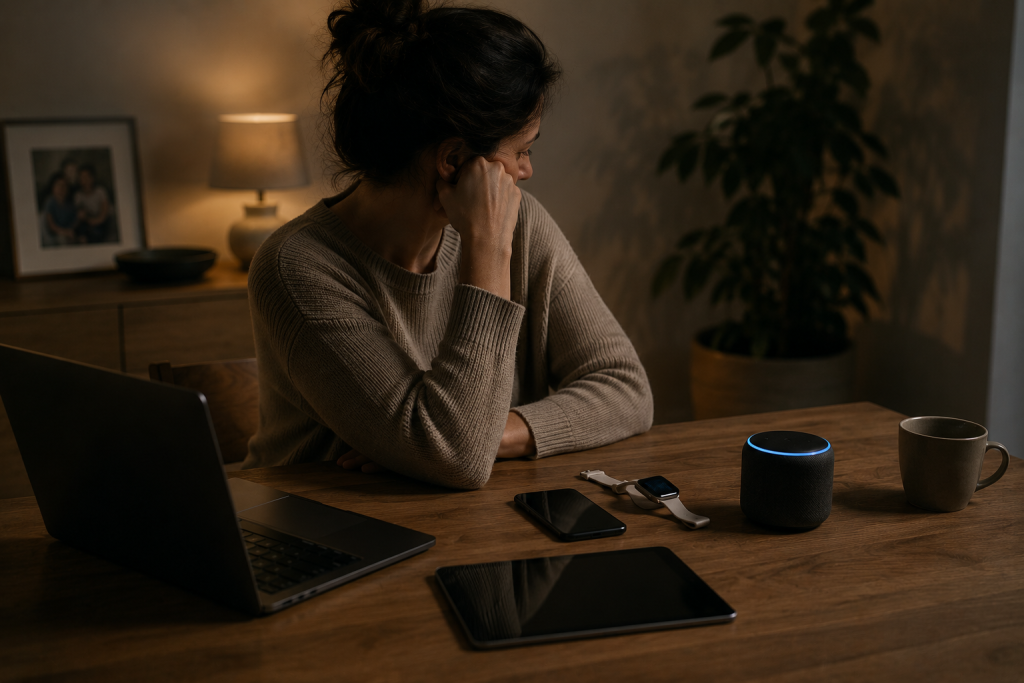
The introduction of New South Wales’s coercive control laws has transformed the way surveillance is viewed in the context of domestic violence. Coercive control focuses on repeated patterns of abusive behaviour, including monitoring or tracking a person via electronic means. Read more here When Control Becomes a Crime.
Technology can become one component of that alleged pattern. Examples in a domestic violence context may include:
- Secretly monitoring a partner’s movements;
- Installing surveillance devices inside the home;
- Monitoring communications;
- Demanding access to passwords; or
- Using technology to isolate or control another person.
Equally, recordings may also become crucial evidence relied upon by either the prosecution or the defence.
Surveillance evidence often raises difficult legal questions about admissibility and legality. It’s essential to obtain legal advice as early as possible.
Call us today on 02 8528 2541 or Request a Call Back to book a confidential consultation to discuss your matter and your defence options.